Center for Assurance Research and Engineering

The Great Debate: How to Modernize Financial Regulation and Create Economic Stability in a Digital Age

Join CARE Mailing List


The regulation of financial services in the U.S. is based on a bank-centric model established for the conditions that existed 90 years ago after the Great Depression. Today’s financial services world is far more diversified with less of it regulated. As a result, we continue to see events that seriously destabilize our financial system.

As the Administration considers the future of financial services regulation, it is time to evaluate how we can create a financial regulatory system that (i) reduces financial stability risks ignored by asymmetrical oversight, (ii) confronts known structural risks created by the digital economy and (iii) deploys and utilizes predictive artificial intelligence to deal with threats before they spiral out of control.

Intellectual Property Aspects of the Executive Order on the Safe, Secure, and Trustworthy Development and Use of Artificial Intelligence — Article by Gary Rinkerman

Join CARE Mailing List

ABSTRACT

JANUARY 2024

The proliferation of AI tools in the arts, commercial design industries, and other endeavors has raised core questions regarding who or what actually supplied the alleged creative or inventive elements, if any, to the AI system’s output. In both U.S. copyright and patent law the question focuses on a case-by-case analysis as to how much of the final product evidences human “authorship” or invention. Also, creativity as well as infringement, can be located in various phases of the AI system’s creation, ingestion of training materials, management, and operation – including its output, whether affected prior to the output or after it. Issues such as liability for selecting ingestion materials or target data, as well as the potential inadvertent triggering of patent law’s bar date through use of specific AI systems, have also come to the forefront of AI’s potential to secure, forfeit, or impact claimed proprietary rights in AI-assisted creative and inventive activities. Several alternative intellectual property and unfair competition approaches that can supplement or supplant copyright and patent law principles also come into play as users of AI seek to protect the products of their efforts.

AUTHOR

Gary Rinkerman is a partner at the law firm of FisherBroyles LLP, an Honorary Professor of U.S. Intellectual Property Law at Queen Mary University in London, and a Senior Fellow at the Center for Assurance Research and Engineering (“CARE”) in the College of Engineering and Computing at George Mason University, Virginia. For those interested in “digital archeology,” Professor Rinkerman also successfully argued one of the first cases in which copyright in object code was enforced and he co-founded and served as Editor-in-Chief for Computer Law Reporter, one of the first legal publications (in the 1980s) to focus exclusively on law and computer technologies. This article should not be considered legal advice. The presentation of facts and the opinions expressed in this article are attributable solely to the author and do not necessarily reflect the views of any persons, organizations or entities with which he is affiliated or whom he represents. The author would also like to thank J.P. Auffret, Director of CARE, for his continuing support and for his expertise in the frontier areas of Artificial Intelligence.

Analyser son marché pour dénicher les opportunités d’Affaires

Join CARE Mailing List

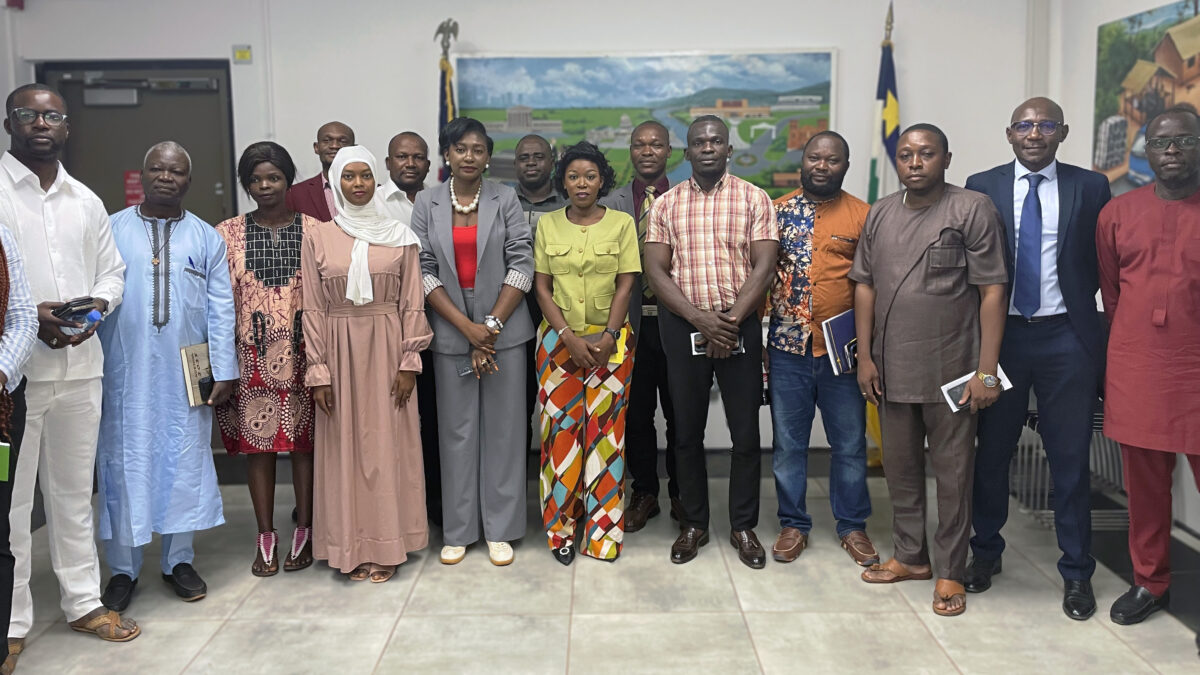
Serge Adouaka, CARE and the U.S. Embassy Bangui, CAR hosted 25 to 30 technology entrepreneurs on February 20th, 2025, as part of a conclusion to CARE's Central African Republic (CAR) Technology Entrepreneurship and ICT Leadership grant. The topic of the forum was identifying market opportunities and fostering a technology entrepreneur network in CAR.
Ministère des PME et de la Promotion du Secteur Privé-RCA — in Bangui, Central African Republic.

Ministère des PME et de la Promotion du Secteur Privé-RCA — in Bangui, Central African Republic.

Ministère des PME et de la Promotion du Secteur Privé-RCA — in Bangui, Central African Republic.

Ministère des PME et de la Promotion du Secteur Privé-RCA — in Bangui, Central African Republic.

Technology and Education

Join CARE Mailing List

Technology experts emphasize the ethical and policy challenges of integrating technology into education, advocating for curricula that prepare students for a digital future while addressing issues of equity, access, and digital literacy. Concerns include the ethical use of AI-driven learning tools, data privacy in student tracking systems, and the digital divide that can exacerbate educational inequalities. Ensuring that students receive relevant, up-to-date instruction on technology—covering topics like cybersecurity, AI bias, and responsible AI use—is crucial for fostering informed and critical users of emerging technologies. Policymakers and educators need to develop policies that promote ethical technology use, ensure teacher training keeps pace with advancements, and incorporate diverse perspectives to create inclusive, future-ready learning environments.

Future Workforce

Join CARE Mailing List

Ethical and forward-thinking policies need to address the impact of automation and AI on the future workforce. Concerns include job displacement, skill gaps, and the need for continuous workforce re-skilling to keep pace with technological advancements. Ensuring that AI-driven automation enhances rather than replaces human labor requires policies that promote equitable access to retraining programs and foster collaboration between industry, government, and educational institutions. Experts warn against unchecked technological adoption that prioritizes efficiency over worker well-being, advocating instead for policies that protect labor rights, prevent bias in AI-driven hiring and performance assessments, and create new opportunities for meaningful employment. A proactive, ethical approach to workforce transformation is essential to ensuring that technology benefits society as a whole rather than deepening economic inequalities.

Artificial Intelligence

Join CARE Mailing List

 
Technology experts recognize that Artificial Intelligence presents a complex array of ethical and policy challenges that professionals in all fields need to consider. One primary concern is the potential for bias in AI systems. Because these systems learn from data, any historical biases in that data—whether related to race, gender, or socioeconomic status—can be perpetuated or even amplified, affecting decisions in areas like hiring, law enforcement, or healthcare. Another issue is privacy, especially as AI systems often rely on vast amounts of personal data. The risk here is not only data breaches but also the possibility of invasive surveillance or misuse by bad actors. Furthermore, AI’s increasing capability to automate tasks raises questions about job displacement and economic inequality, as certain roles may become obsolete, while others require entirely new skill sets. From a policy perspective, clear regulations need to ensure AI is developed and deployed responsibly—protecting individuals' rights, preventing harm, and maintaining fairness. Policies must also be flexible enough to keep pace with the fast-evolving nature of the technology. Addressing these issues will require collaboration across industries and careful thought about how AI can serve the common good without exacerbating existing societal problems.

J.P. Auffret gives talk in Thailand at AI Strategic Transformation: Principles and Practices for CIOs international conference on “Driving AI Innovation for Sustainable Growth”

Join CARE Mailing List


The conference was a collaborative effort between the College of Innovation at Thammasat University (CITU) and the International Academy of CIO (IACIO). The event served as a platform for fostering partnerships and knowledge exchange, focusing on harnessing AI to drive sustainable development and economic growth in Thailand.

Dr Jean-Pierre Auffret, Chairman of IACIO, spoke on the evolving role of Chief Information Officers (CIOs) in the digital age. He underscored the importance of redefining the CIO’s role to meet the demands of today’s fast-paced technological advancements. He also stressed the need for ethical AI deployment, advocating for transparency and responsible use of AI within organisational frameworks.

“Our goal is to promote the use of AI that not only boosts efficiency but also aligns with ethical standards and social responsibility,” Dr Auffret stated.

The IACIO 2024 conference highlighted the importance of international collaboration in AI development. The event brought together experts from over 50 countries, fostering the exchange of ideas and best practices on integrating AI. Discussions emphasised balancing innovation with ethics to ensure responsible and sustainable AI deployment.

AI and Work (STEP)

Join CARE Mailing List


Generative AI and the future of work in America, McKinsey Global Institute Report, July 26, 2023

AI and Education (STEP)

Join CARE Mailing List

Technology experts emphasize the ethical and policy challenges of integrating technology into education, advocating for curricula that prepare students for a digital future while addressing issues of equity, access, and digital literacy. Concerns include the ethical use of AI-driven learning tools, data privacy in student tracking systems, and the digital divide that can exacerbate educational inequalities. Ensuring that students receive relevant, up-to-date instruction on technology—covering topics like cybersecurity, AI bias, and responsible AI use—is crucial for fostering informed and critical users of emerging technologies. Policymakers and educators need to develop policies that promote ethical technology use, ensure teacher training keeps pace with advancements, and incorporate diverse perspectives to create inclusive, future-ready learning environments.

Principles for the Development, Deployment, and Use of Generative AI Technologies, ACM Technology Policy Council (June 27, 2023)

Generative Artificial Intelligence (AI) is a broad term used to describe computing techniques and tools that can be used to create new content such as text, speech and audio, images and video, and computer code. While such systems offer tremendous opportunities for benefits to society, they also pose very significant risks. The increasing power of generative AI systems, the speed of their evolution, broad application, and potential to cause significant or even catastrophic harm means that great care must be taken in researching, designing, developing, deploying, and using them. Existing mechanisms and modes for avoiding such harm likely will not suffice.

AI Regulation (STEP)

Join CARE Mailing List

The ethical and policy challenges of AI regulation include the need for balanced oversight that fosters innovation while mitigating harm. Regulations should be adaptable to the rapid evolution of AI, avoiding overly rigid rules that stifle progress while ensuring accountability and transparency. Key concerns include bias in AI decision-making, data privacy, and the societal impact of automation. Policies should encourage interdisciplinary collaboration and integrate insights from ethics, law, and social sciences to create frameworks that are both practical and forward-looking. Regulations should avoid reactive, one-size-fits-all approaches and instead call for nuanced, evidence-based regulations that consider the diverse applications and risks of AI technologies.

CARE Race to Regulate the Internet program was held on May 8
(click image below to view on YouTube)

Should States or the Federal Government Set the Rules for Websites Content, Child Protection and Personal Data Control?

See headlines and details at the CARE Race to Regulate the Internet update.


Statement in Support of Mandatory Comprehensive Digital Accessibility Regulations

US Technology Policy Committee (May 31, 2024)