Center for Assurance Research and Engineering

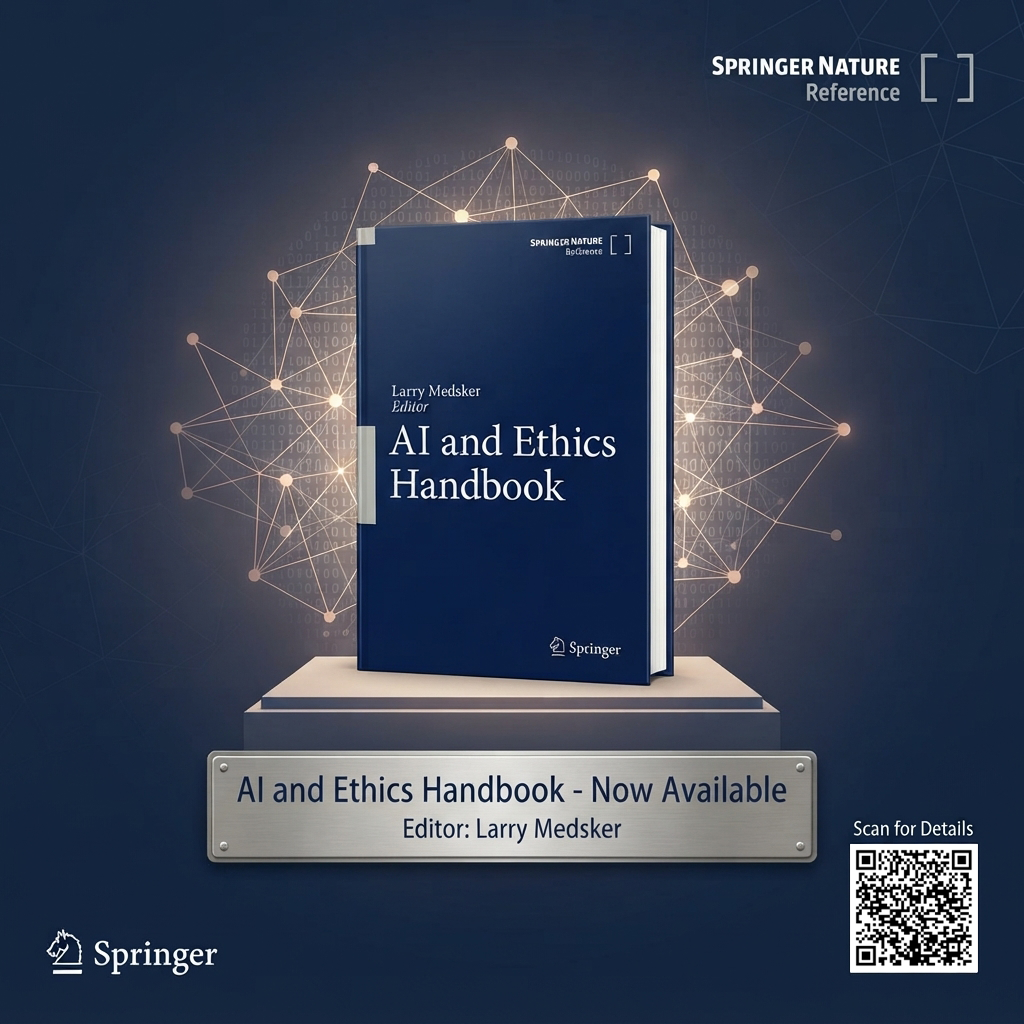
AI and Ethics Handbook, edited by past chair of the ACM US Technology Policy Committee (USTPC) Larry Medsker, now available

Join CARE Mailing List

The AI and Ethics Handbook, edited by past chair of the ACM US Technology Policy Committee (USTPC) Larry Medsker, and published by Springer Nature, is a reference work that examines the ethical dimensions of artificial intelligence across research, policy, and practice. It brings together contributions from more than fifty researchers, scholars, and practitioners and addresses foundational questions of accountability, transparency, fairness, and human oversight. It also examines the societal challenges AI systems pose as they move into healthcare, education, the workplace, and everyday life. Structured as a reference work with future editions planned, it is intended for researchers, students, practitioners, and policymakers. The handbook and its chapters are available online through Springer (DOI: 10.1007/978-3-032-12201-8).  Preface and Table of Contents included below.

Shelburne resident edited new book on AI and Ethics

A multi-author reference on the ethics of artificial intelligence “The AI and Ethics Handbook,” published by Springer, examines the ethical dimensions of artificial intelligence across research, policy and practice. Edited by Larry Medsker, it is part of Springer’s reference works program and is maintained as a designated reference, with future editions planned.

PREFACE and TABLE OF CONTENTS

Dr. Jean-Pierre Auffret Moderates International CIO Discussion of AI-driven Organizational Transformation

Join CARE Mailing List

The landscape of enterprise technology is shifting faster than ever. As artificial intelligence moves from speculative pilot programs to fundamental infrastructure, IT leaders are no longer just managing systems—they are redefining business strategy.

Capturing this pivotal moment, the 2026 Global CIO Academy recently hosted a flagship panel discussion on the international CIO discussion of AI driven organizational transformation. The session was masterfully moderated by Dr. Jean-Pierre Auffret, Co-Founder and Vice President of the International Academy of CIO, whose expertise in digital governance set the stage for an extraordinary exchange of ideas.

Bringing together more than 10,000 executive peers from 125 countries, this year’s Academy underscored a powerful truth: while the underlying technology of the digital age is universal, the strategy behind its deployment must be uniquely tailored to local regulatory environments, market demands, and cultural landscapes.

A Global Mosaic of Innovation: Qatar, South Africa, and India

The highlight of the discussion was a deep-dive exploration into how three distinct, rapidly evolving economies are pioneering digital transformation. Dr. Auffret guided the conversation across continents, drawing sharp, practical insights from standout speakers representing Qatar, South Africa, and India:

  • Qatar: The representative from Qatar illuminated how the nation is leveraging massive infrastructure investments to spearhead smart-city initiatives and state-of-the-art digital governance. The discussion focused heavily on navigating complex data sovereignty laws and building high-security, resilient architectures that can serve as blueprints for the broader Gulf region.

  • South Africa: Shifting the lens to the African continent, the speaker from South Africa brought invaluable perspectives on agility, change management, and closing the digital divide. Attendees gained a deep understanding of how South African enterprises are utilizing “lean” AI deployments and mobile-first architectures to drive financial inclusion and operational resilience despite infrastructure constraints.

  • India: Representing one of the world’s largest and most dynamic tech ecosystems, the speaker from India highlighted the staggering scale of digital transformation currently taking place. From deploying massive AI-driven automation systems to mastering complex stakeholder communications across hyper-scale enterprises, the Indian perspective offered a masterclass in turning technical capability into tangible commercial value.

Overcoming the “Universal Challenges” of the Modern CIO

Despite the geographic diversity of the panel, Dr. Auffret’s moderation drew out the common threads that bind IT leaders worldwide. Whether managing a multinational in New Delhi or a government agency in Doha, every modern CIO faces the same core hurdles: overcoming organizational resistance to change, proving the ROI of AI to skeptical boards, and moving past the “hype” into real-world application.

As Dr. Auffret noted during the event, the true value of the Global CIO Academy lies in this cross-border synthesis—enabling leaders to step out of their industry silos, stress-test their strategies against global best practices, and return to their organizations as true business architects.

Join the Next Generation of Tech Leaders

The 2026 cohort of the Global CIO Academy continues to serve as the definitive launching pad for ambitious IT directors and C-level executives aiming to command the boardroom and future-proof their organizations.

Missed the live panel? You can still access strategic frameworks, world-class executive masterclasses, and an unmatched international peer network. Learn more about upcoming sessions, curriculum modules, and application details by visiting the official program page:

👉 Explore the Global CIO Academy

*** What are your biggest hurdles when aligning global AI trends with your local IT strategy? Let’s keep the conversation going in the comments below!

J.P. Auffret moderates plenary discussion at Global CIO international online conference

Join CARE Mailing List


The Global CIO international online conference, Key Challenges for CIOs in 2026, was moderated by J.P. Auffret on February 12th, 2026. The conference has leading experts to discuss the real challenges of 2026 and share working solutions. No theory—only the practical experience of colleagues who have already overcome these challenges. Participation is free of charge for CIO’s and IT Managers of customer companies.

Learn more about the conference

Global CIO is based in Tashkent, Uzbekistan.

Winning the Race: America’s AI Action Plan, Part 2 and Part 3 — Article by Gary Rinkerman

Join CARE Mailing List

INTRODUCTION

The following two-part discussion highlights two important developments in recent efforts to address the uses of Artificial Intelligence in creating fictitious and damaging content.  The topics are, respectively, the creation and detection of false evidence in adjudicative and deliberative processes; and (2) the proliferation of injurious content on the Internet, assisted through the use of Artificial Intelligence.  The issues are grouped together because they share some common technological concerns – and they are noted together in the recent White House document, Winning the Race: AMERICA’S AI ACTION PLAN.  The style of treatment, as with other parts of this series, includes some historical context, meditation and (hopefully) constructive wandering, treatment of related issues, and focus on the current and potential future state of pertinent law and processes.  In many ways, the style departs from the usual forms of legal discussion.  However, this series of discussions on Artificial Intelligence was conceived as an alternative to the proliferation of articles in more traditional formats.                       

The core conclusions with regard to the topics treated in the following discussions are: (1) we need a readily available, competitively-checked deepfake and digital fraud detection resource for use in conjunction with evidentiary rules in their current or amended form; (2) the TAKE IT DOWN Act’s provisions, including takedown procedures for injurious visual content, should be expanded to expressly include audio content; and (3) the model provided by the TAKE IT DOWN Act’s expedited, bi-partisan consideration should now be focused on the roles of Artificial Intelligence in creating potentially dangerous Large Language Models services or products, such as chatbots.  These points are placed in context in the relevant sections of the discussions, but other less prominent issues – such as the appropriateness of criminal sanctions provided by the TAKE IT DOWN Act and the deadline to institute notice and takedown procedures – are also considered.

AUTHOR

Gary Rinkerman is a Founding Partner at the law firm of Pierson Ferdinand, LLP, an Honorary Professor of Intellectual Property Law at Queen Mary University School of Law in London, a member of George Mason University’s Center For Assurance Research and Engineering, and a Senior Fellow at George Mason University’s Center for Excellence in Government Cybersecurity Risk Management and Resilience. The views and information provided in this article are solely the work of the author and do not comprise legal advice.  They are not for attribution to any entity represented by the author or with which he is affiliated or is a member – including, e.g., the firm in which he is a member or any of its clients.  All Internet citations and links in this article were visited and validated on September 4, 2025.

Winning the Race: America’s AI Action Plan — Article by Gary Rinkerman

Join CARE Mailing List

INTRODUCTION

On July 23, 2025, the Trump Administration published Winning the Race: AMERICA’S AI ACTION PLAN (“AI Action Plan”).[1]  Among the goals of the AI Action Plan is the elimination of inappropriate bias[2] and false information in the government’s AI systems.  The corruptions caused by inappropriate biasing, which may be introduced at any number of stages in what has been called “the AI pipeline,” lead to systems and outputs that are unreliable and, in some instances, injurious.[3]  A core concern regarding the outputs of such flawed systems is that the outputs can contain AI hallucinations – a phenomenon in which the system “in a large language model (LLM), often a generative AI chatbot or computer vision tool, perceives patterns or objects that are nonexistent or imperceptible to human observers, creating outputs that are nonsensical or altogether inaccurate.”[4] The roots of this concern are diverse and run deep, but a conspicuous and widely publicized example of hallucinating AI is provided by Google’s attempt to avoid bias and promote diversity in the outputs of its  generative AI Gemini model.  Google’s tampering with historical truths was ostensibly well-intentioned and harmless, but it pointed out some underlying AI-related concerns that have more serious and potentially injurious consequences.  These consequences arise when a flawed AI system’s output is being relied on to make decisions that affect people’s lives. The following text briefly recaps the Google Gemini matter and then discusses aspects of the AI Action Plan that are intended to identify and eliminate inappropriate bias and falsity in government AI systems.

*This article is the first in a series of discussions of Winning the Race: AMERICA’S AI ACTION PLAN, issued by the Trump Administration on July 23, 2025.

AUTHOR

Gary Rinkerman is a Founding Partner at the law firm of Pierson Ferdinand, LLP, an Honorary Professor of Intellectual Property Law at Queen Mary University School of Law in London, a member of George Mason University’s Center For Assurance Research and Engineering, and a Senior Fellow at George Mason University’s Center for Excellence in Government Cybersecurity Risk Management and Resilience. The views and information provided in this article are solely the work of the author and do not comprise legal advice.  They are not for attribution to any entity represented by the author or with which he is affiliated or a member.  All Internet citations and links in this article were visited and validated on July 27, 2025.

AI Proxy Wars: The Struggle For Control Of Corporate Adoption And Use Of Artificial Intelligence Technologies — Article by Gary Rinkerman

Join CARE Mailing List

ABSTRACT

Attempts to exercise control over corporate artificial intelligence (“AI”) adoption, development, implementation, and management have surfaced in the form of Executive Orders, legislation, rulemaking, union and guild agreements, and case law. However, shareholders in publicly traded corporations have also used the shareholder Proposal and Proxy voting process to introduce sweeping or focused efforts to force corporate management to address and disclose information on a variety of AI-related issues. These Proposals are often couched in language that references ethical and significant social policy issues that arise in course of the target company’s AI-related business plans and activities. Of course, the determination of what is “ethical” or what constitutes a “significant social policy issue” can be quite subjective or driven by the advocate’s ancillary political and economic goals. This article discusses three recent attempts to use the shareholder Proposal and Proxy voting process to impose AI-related “transparency” and control requirements on major users of the technology. The common thread that runs through each effort is the strategic use of shareholder initiatives to attempt to influence the policies and management approach to AI and AI-related issues, including, in some instances, specific security, privacy, copyright, and personality rights issues.

AUTHOR

Gary Rinkerman is a Founding Partner at the law firm of Pierson Ferdinand, LLP, an Honorary Professor of Intellectual Property Law at Queen Mary University School of Law in London, a member of George Mason University’s Center For Assurance Research and Engineering, and a Senior Fellow at George Mason University’s Center for Excellence in Government Cybersecurity Risk Management and Resilience. The views and information provided in this article express solely the work of author and do not comprise legal advice and are not for attribution to any entity represented by the author or with which he is affiliated or a member.

The Great Debate: How to Modernize Financial Regulation and Create Economic Stability in a Digital Age

Join CARE Mailing List


The regulation of financial services in the U.S. is based on a bank-centric model established for the conditions that existed 90 years ago after the Great Depression. Today’s financial services world is far more diversified with less of it regulated. As a result, we continue to see events that seriously destabilize our financial system.

As the Administration considers the future of financial services regulation, it is time to evaluate how we can create a financial regulatory system that (i) reduces financial stability risks ignored by asymmetrical oversight, (ii) confronts known structural risks created by the digital economy and (iii) deploys and utilizes predictive artificial intelligence to deal with threats before they spiral out of control.

Intellectual Property Aspects of the Executive Order on the Safe, Secure, and Trustworthy Development and Use of Artificial Intelligence — Article by Gary Rinkerman

Join CARE Mailing List

ABSTRACT

JANUARY 2024

The proliferation of AI tools in the arts, commercial design industries, and other endeavors has raised core questions regarding who or what actually supplied the alleged creative or inventive elements, if any, to the AI system’s output. In both U.S. copyright and patent law the question focuses on a case-by-case analysis as to how much of the final product evidences human “authorship” or invention. Also, creativity as well as infringement, can be located in various phases of the AI system’s creation, ingestion of training materials, management, and operation – including its output, whether affected prior to the output or after it. Issues such as liability for selecting ingestion materials or target data, as well as the potential inadvertent triggering of patent law’s bar date through use of specific AI systems, have also come to the forefront of AI’s potential to secure, forfeit, or impact claimed proprietary rights in AI-assisted creative and inventive activities. Several alternative intellectual property and unfair competition approaches that can supplement or supplant copyright and patent law principles also come into play as users of AI seek to protect the products of their efforts.

AUTHOR

Gary Rinkerman is a partner at the law firm of FisherBroyles LLP, an Honorary Professor of U.S. Intellectual Property Law at Queen Mary University in London, and a Senior Fellow at the Center for Assurance Research and Engineering (“CARE”) in the College of Engineering and Computing at George Mason University, Virginia. For those interested in “digital archeology,” Professor Rinkerman also successfully argued one of the first cases in which copyright in object code was enforced and he co-founded and served as Editor-in-Chief for Computer Law Reporter, one of the first legal publications (in the 1980s) to focus exclusively on law and computer technologies. This article should not be considered legal advice. The presentation of facts and the opinions expressed in this article are attributable solely to the author and do not necessarily reflect the views of any persons, organizations or entities with which he is affiliated or whom he represents. The author would also like to thank J.P. Auffret, Director of CARE, for his continuing support and for his expertise in the frontier areas of Artificial Intelligence.

Analyser son marché pour dénicher les opportunités d’Affaires

Join CARE Mailing List

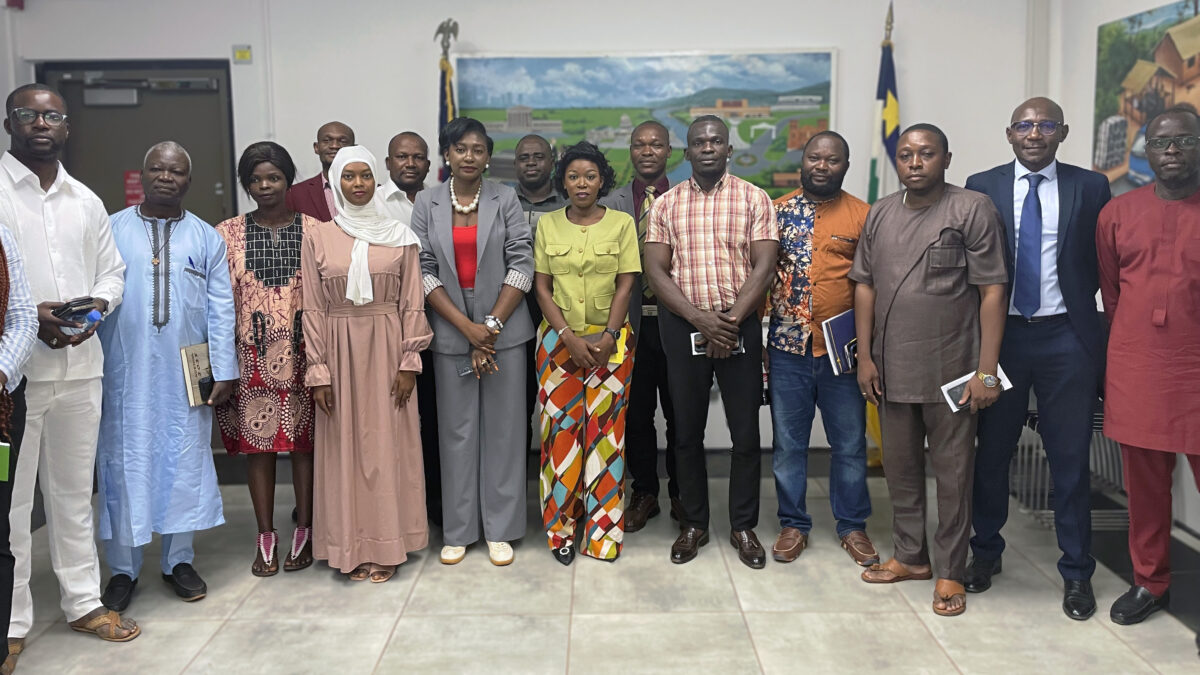
Serge Adouaka, CARE and the U.S. Embassy Bangui, CAR hosted 25 to 30 technology entrepreneurs on February 20th, 2025, as part of a conclusion to CARE's Central African Republic (CAR) Technology Entrepreneurship and ICT Leadership grant. The topic of the forum was identifying market opportunities and fostering a technology entrepreneur network in CAR.
Ministère des PME et de la Promotion du Secteur Privé-RCA — in Bangui, Central African Republic.

Ministère des PME et de la Promotion du Secteur Privé-RCA — in Bangui, Central African Republic.

Ministère des PME et de la Promotion du Secteur Privé-RCA — in Bangui, Central African Republic.

Ministère des PME et de la Promotion du Secteur Privé-RCA — in Bangui, Central African Republic.

J.P. Auffret gives talk in Thailand at AI Strategic Transformation: Principles and Practices for CIOs international conference on “Driving AI Innovation for Sustainable Growth”

Join CARE Mailing List


The conference was a collaborative effort between the College of Innovation at Thammasat University (CITU) and the International Academy of CIO (IACIO). The event served as a platform for fostering partnerships and knowledge exchange, focusing on harnessing AI to drive sustainable development and economic growth in Thailand.

Dr Jean-Pierre Auffret, Chairman of IACIO, spoke on the evolving role of Chief Information Officers (CIOs) in the digital age. He underscored the importance of redefining the CIO’s role to meet the demands of today’s fast-paced technological advancements. He also stressed the need for ethical AI deployment, advocating for transparency and responsible use of AI within organisational frameworks.

“Our goal is to promote the use of AI that not only boosts efficiency but also aligns with ethical standards and social responsibility,” Dr Auffret stated.

The IACIO 2024 conference highlighted the importance of international collaboration in AI development. The event brought together experts from over 50 countries, fostering the exchange of ideas and best practices on integrating AI. Discussions emphasised balancing innovation with ethics to ensure responsible and sustainable AI deployment.